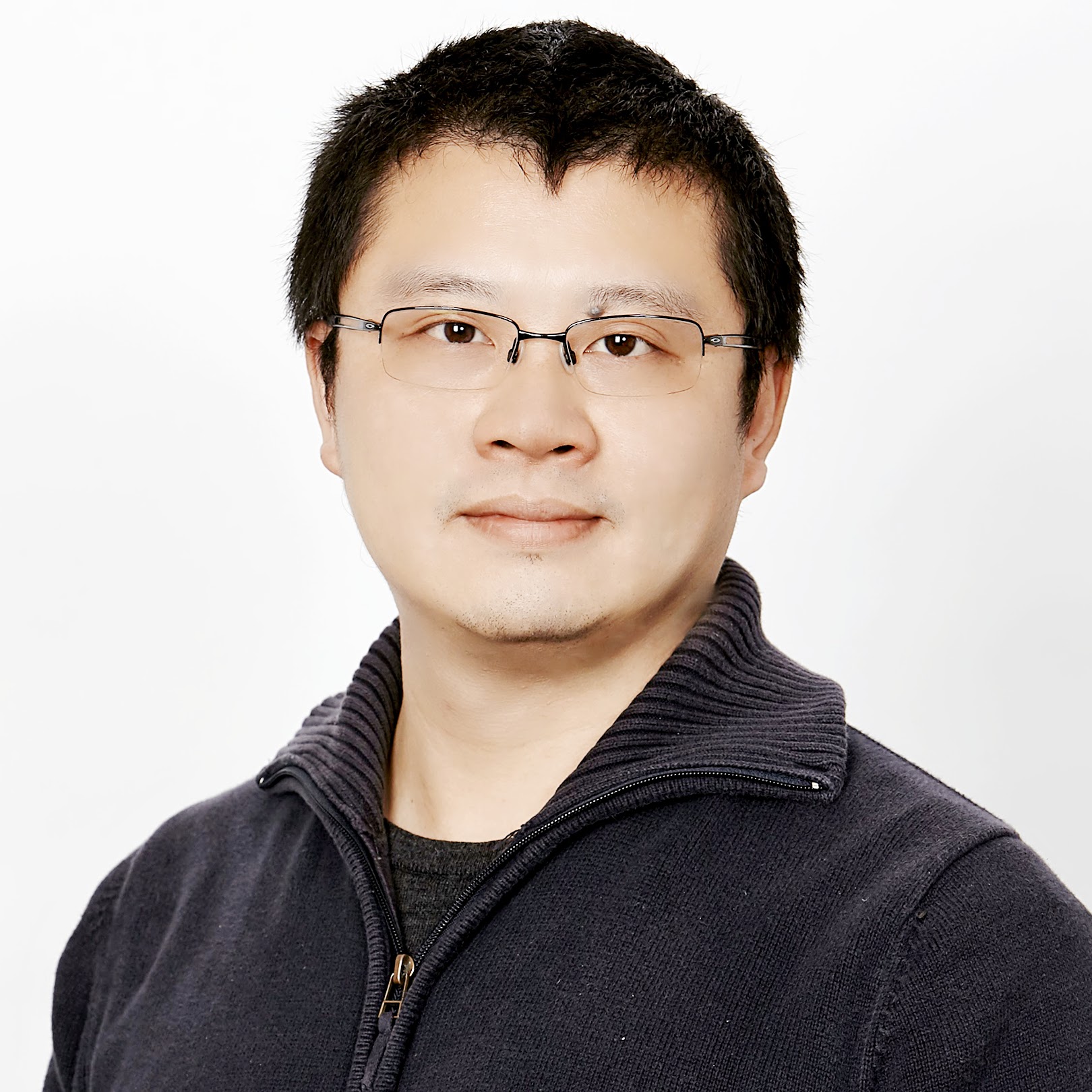
Dr Lan Du is an Associate Professor at Monash University and is affiliated with the machine learning group in the Department of Data Science and AI. As a faculty member, he is responsible for teaching and research in the field of machine learning.
His research interest lies in the joint area of machine/deep learning and natural language processing, which includes (but is not limited to)
- Active learning: both theories and applications
- Uncertainty Estimation for NLP and CV on either uni-modal or multimodal data
- Knowledge distillation in CV and NLP
- Multi-view/modal learning
- AI for Chemistry: Molecular property prediction, molecular generation, etc
- AI for Economics
Dr Du has a strong interest in cross-disciplinary research, which involves applying machine learning and artificial intelligence techniques to solve real-world problems in different disciplines. He believes that the key to unlocking the full potential of AI lies in bridging the gap between advanced AI research and its practical application.
He has collaborated with researchers in fields including Medicine, Chemistry and Economics, to develop AI solutions to address complex problems in these areas. His research focuses on developing innovative machine learning algorithms and models that can analyze and make sense of complex data sets to improve decision-making, predict outcomes, and drive innovation in various fields. By working across disciplines, he hopes to create new opportunities for applying AI and machine learning in practical, real-world settings, and to help ensure that these technologies are used in a responsible, ethical, and beneficial way.
Information for future PhD candidates
As an associate professor in machine learning, Dr Du is always looking for talented and motivated PhD students, who are passionate about pursuing research in these areas. His research group focuses on developing innovative algorithms and models for analyzing complex data sets, particularly on ML and its applications. Students who join Dr. Du's research group can expect to work on cutting-edge research projects in machine learning, using state-of-the-art techniques and tools to develop novel solutions to real-world problems.
To succeed in Dr Du's research group, students should be self-motivated, creative, and dedicated to advancing the state of the art in machine learning. They should also be able to work independently and collaboratively and have a strong background in computer science, mathematics, or a related field.
The PhD candidates can be found via (click the hyperlink for more information)
If you are interested in pursuing your PhD at Monash, and if you think you are competitive enough (E.g., the WAM of your master's study is equivalent to H1 honour, and you have gained some research experience) to apply for the scholarship, then
- Minimum requirements:
- WAM ≥ 85
- Undergraduate or postgraduate thesis mark ≥ 85
- At least 3 first-author publications in CORE A*/A venues or Q1 journals
- IELTS overall score ≥ 6.5, with each component ≥ 6.0
- Read how to apply, and review your own eligibility
- Fill in the Expression of Interest (EOI) form.
Recent Research highlights
- 2026
- IEEE Transactions on Multimedia
- Adaptive Decoupled Knowledge Distillation via Self-learning
- Proceedings of the AAAI Conference on Artificial Intelligence
- Identitystory: Taming your identity-preserving generator for human-centric story generation
- Next Generation Active Learning: Mixture of LLMs in the Loop
- Proceedings of the IEEE/CVF Conference on Computer Vision and Pattern …
- DPL: Decoupled Prototype Learning for Enhancing Robustness of Vision-Language Transformers to Missing Modalities
- IEEE Transactions on Multimedia
- 2025
- IEEE Transactions on Services Computing
- Multi-scale collaborative distillation graph neural networks for session-based recommendation
- Proceedings of the 33rd ACM international conference on multimedia
- Enhancing multi-view open-set learning via ambiguity uncertainty calibration and view-wise debiasing
- Proceedings of the 63rd Annual Meeting of the Association for Computational …
- Neural topic modeling with large language models in the loop
- Proceedings of the Computer Vision and Pattern Recognition Conference (CVPR …
- CGMatch: A Different Perspective of Semi-supervised Learning
- Forty-second International Conference on Machine Learning
- Navigating Conflicting Views: Harnessing Trust for Learning
- IEEE Transactions on Services Computing